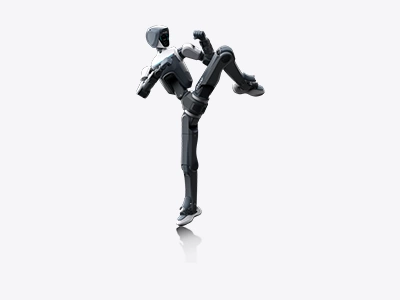
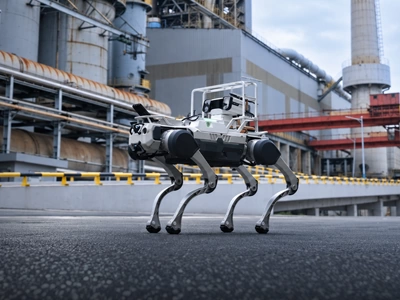

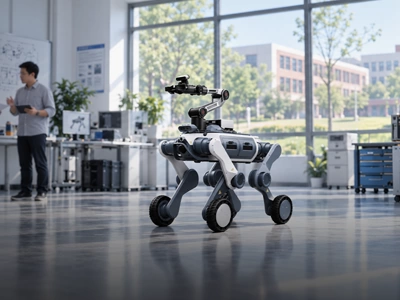
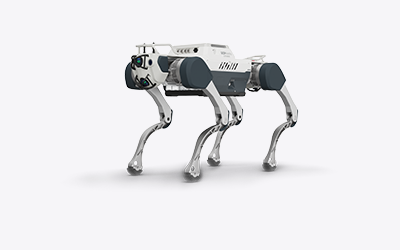
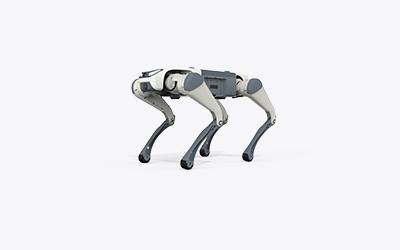
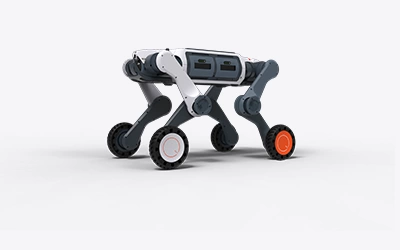
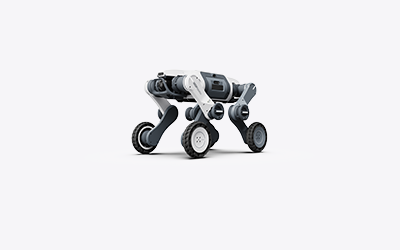
The LYNX M20 combines mobile sensing and automated monitoring to support precision livestock farming at Funiu Animal Husbandry’s Hushan farm.
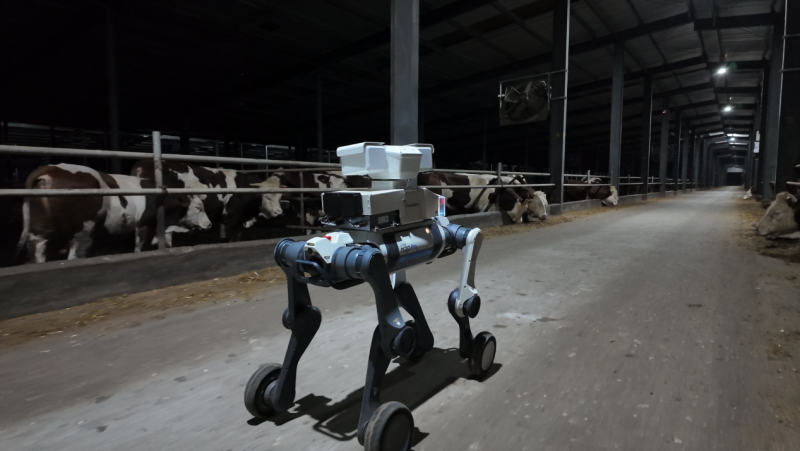
DEEP Robotics has deployed its LYNX M20 wheel-legged robot at Funiu Animal Husbandry’s Hushan cattle farm in Henan, supporting automated monitoring of cattle behavior, barn conditions, and farm infrastructure. Equipped with an integrated inspection solution developed jointly with technology partner Cloudwise, the robot brings mobile multimodal sensing to the day-to-day management of a large beef cattle operation.
Covering approximately 73 hectares, the farm faces growing inspection demands as its operations expand. Monitoring cattle health and behavior, managing barn conditions, and checking infrastructure have traditionally relied heavily on staff making routine rounds. The workload limits inspection frequency and can leave changes unnoticed or delay alerts. Fixed cameras have blind spots, while readings from isolated environmental sensors provide only a partial picture of conditions across a barn.
The deployment is intended to help address these gaps through more frequent, consistent observation, providing a practical model for more precise livestock management and improved operational efficiency.
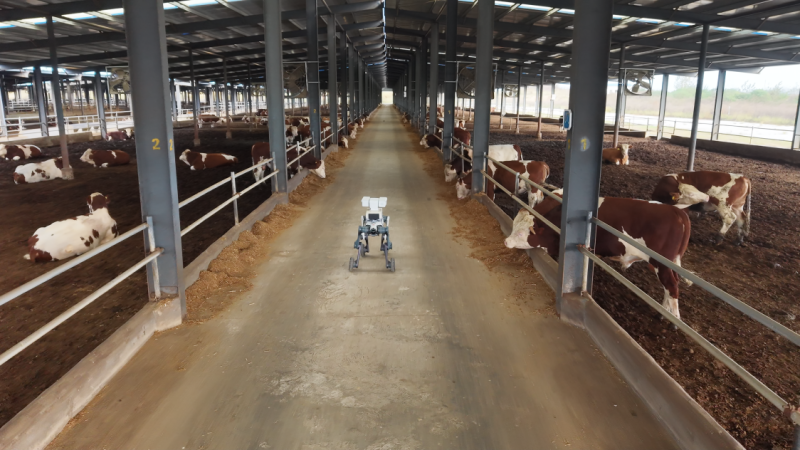
AI Monitoring Makes Cattle Behavior Measurable
Beef cattle management has long depended on the experience of farm managers and stockpersons. Estimates of leftover feed, the proportion of cattle at the feed bunk, and the proportion lying down often rely on visual judgment. Reduced feed intake, lameness, and heat stress can affect weight gain before staff recognize a problem, leading to wasted feed and lost growth. Fixed cameras can miss important details when fences or moving animals obstruct their view.
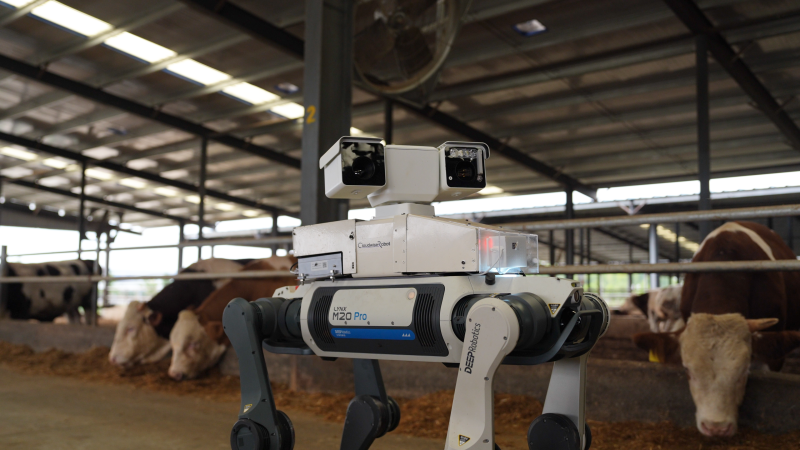
The LYNX M20 carries a pan-tilt visible-light camera, a thermal imaging sensor, and other multimodal sensing equipment. As it travels through barn aisles, it adjusts its camera position and pace in response to cattle moving or changing posture, allowing it to observe animals from different viewpoints.
The integrated system can count cattle by pen and distinguish feeding, lying, and standing behavior to calculate the proportion of animals lying down. It can detect subtle changes in stride and weight bearing that may indicate emerging lameness, helping staff locate animals requiring attention. Close-range observations support recognition of rumination and counting of chewing movements, while detected fighting triggers alerts. Thermal imaging also screens cattle for abnormal surface-temperature patterns and sends notifications to the management platform.
These observations turn behavioral changes into measurable indicators that can be compared and tracked over time. Earlier identification gives farm staff an opportunity to intervene sooner, helping reduce treatment costs and losses associated with premature sale, while protecting returns during the finishing period.
“We used to inspect the pens by eye,” said a veterinarian at Funiu Animal Husbandry. “There are more than 20 pens on the farm, so some abnormalities were inevitably difficult to spot promptly. Now, the DEEP Robotics robot dog can monitor how many cattle are at the feed bunk, their feeding and lying behavior, fighting, and even temperature.”
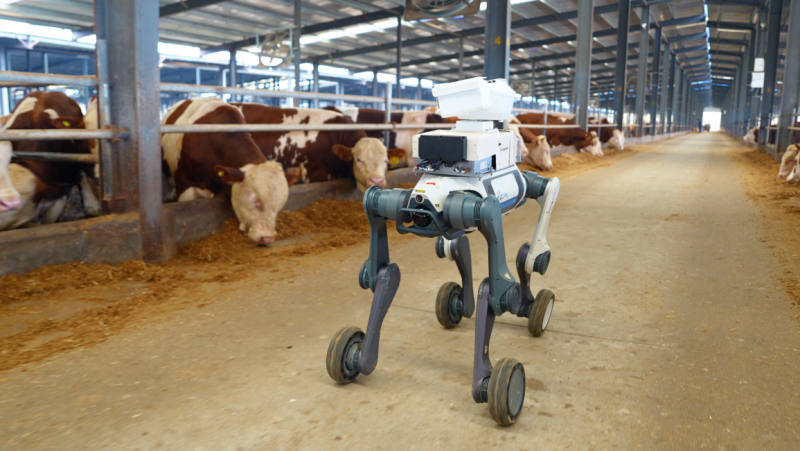
Mobile Environmental Monitoring Provides Earlier Alerts
Barn conditions directly affect cattle growth and reproduction. High temperatures and humidity can cause heat stress in summer, while inadequate winter ventilation can allow harmful gases to accumulate. Manually recorded readings from scattered temperature and humidity meters can be fragmented and out of date. Individual sensors also struggle to capture conditions throughout an entire building.
Poorly ventilated corners and areas where manure accumulates can become local hotspots for heat and ammonia. By the time staff notice that a barn feels hot and stuffy, cattle may already have been exposed to prolonged heat stress. Routine rounds can also miss unsecured doors or damaged fencing.
As the LYNX M20 patrols, its inspection system collects readings to map temperature, humidity, and ammonia concentrations across the barn. These maps help identify ventilation gaps and localized pollution that isolated sensors may miss. The system also estimates the proportion of forage remaining in feed bunks and flags empty sections to support more timely replenishment.
Infrastructure checks run alongside environmental monitoring. An unsecured barn door triggers an alert, while damaged fencing is photographed and reported. Data are transmitted in real time to the farm’s intelligent inspection platform, where staff can review trends and receive automatic notifications of abnormal conditions.
This information supports targeted adjustments to ventilation and other environmental controls, while helping staff address infrastructure problems promptly.
“With the DEEP Robotics robot dog, we can carry out autonomous inspections around the clock, continuously collect images and data, identify abnormalities in the cattle, and receive remote alerts in real time,” said a manager at Funiu Animal Husbandry. “It reduces the burden on frontline staff and gives us a new inspection solution for a smart farm.”
Connecting Inspection Data with Farm Management
The LYNX M20 follows predefined routes through barn aisles, beside feed bunks, and between pens, visiting designated inspection points. When its battery runs low, it autonomously returns to its charging station and resumes inspections after recharging. This patrol-and-recharge cycle supports round-the-clock monitoring.
Automating routine rounds allows staff to focus on feeding management, disease response, and other work that requires human judgment and hands-on care. Abnormalities detected during inspections are documented with photographs and timestamps, creating traceable records for follow-up and building a farm-specific operational database.
At Hushan farm, information about each animal extends beyond behavior and barn conditions. Identification details, health records, and feeding histories are held in different systems. Smart ear tags collect individual animal data, while AI-enabled fixed cameras provide broader views of the barns. Previously, these sources operated largely in isolation, making it difficult for managers to build a comprehensive picture of herd conditions.
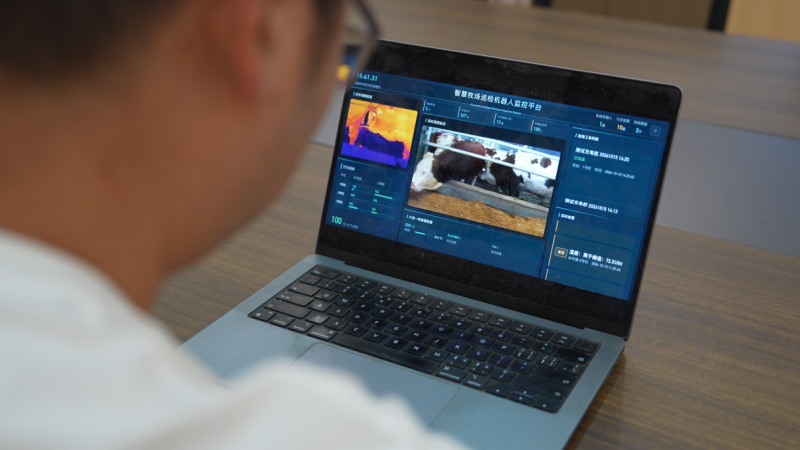
As robotic inspections continue, observations of cattle posture, behavior, feeding, lying activity, and environmental changes are accumulated and linked with data from smart ear tags, fixed cameras, environmental sensors, and production management systems. Together, these records gradually establish a dynamic view of the farm at barn, pen, and individual-animal levels.
The management platform can trace an abnormality from detection and task assignment through corrective action and verification. Tracking changes over time and comparing records also helps staff recognize patterns associated with reduced feeding, unusual activity, heat stress, and disease risk. These insights support precision feeding, earlier health alerts, environmental adjustments, and improvements to inspection schedules and routes.
The robot serves as a mobile sensing point connecting activity inside the barns with the wider farm management system. Linking observations with analysis, follow-up, and review supports more consistent risk management and detailed operational oversight.
The Hushan deployment extends DEEP Robotics’ work in livestock farming. It shows how mobile robotic inspections can complement staff experience with measurable behavioral indicators, provide earlier visibility into environmental problems, and bring previously disconnected information into a more coherent management process.
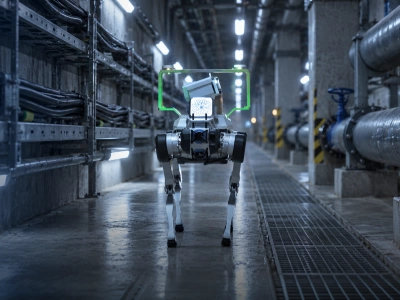
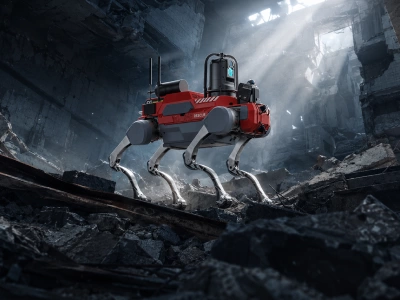
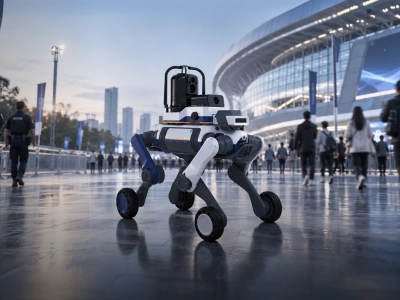
Beyond agriculture, DEEP Robotics develops robotic solutions for energy and power, emergency response and firefighting, security patrols, industrial operations and maintenance, public services, and education and research. Drawing on experience across these sectors, the company is working to integrate robot hardware, software, and industry platforms more closely, adapting proven capabilities to additional operating environments and supporting safer, more efficient work.
